
How Godspeed Became a Streetwear Name: The Roots
Streetwear picked up “godspeed,” a term traditionally offered to travelers facing uncertainty prior to its life on clothing. Carrying real weight, it signified “may fortune ride with you” — a farewell set aside for journeys that counted for something. That’s exactly why the word made its way into streetwear, a culture where clothing has always doubled as a statement of purpose, self, and drive. Understanding godspeed meaning helps explain why one word can anchor a whole clothing philosophy instead of simply decorating a shirt.
Pulling from heavyweight vocabulary is nothing new for streetwear. Terms from the military, religious speech, and old-world expressions have all been drawn on by brands because these words already carry emotional shorthand. Godspeed, unsurprisingly, fit right into that tradition: short, punchy, and read as both blessing and challenge — go fast, go far, and do it with purpose. That duality is part of what makes the name lasting instead of merely fashionable.
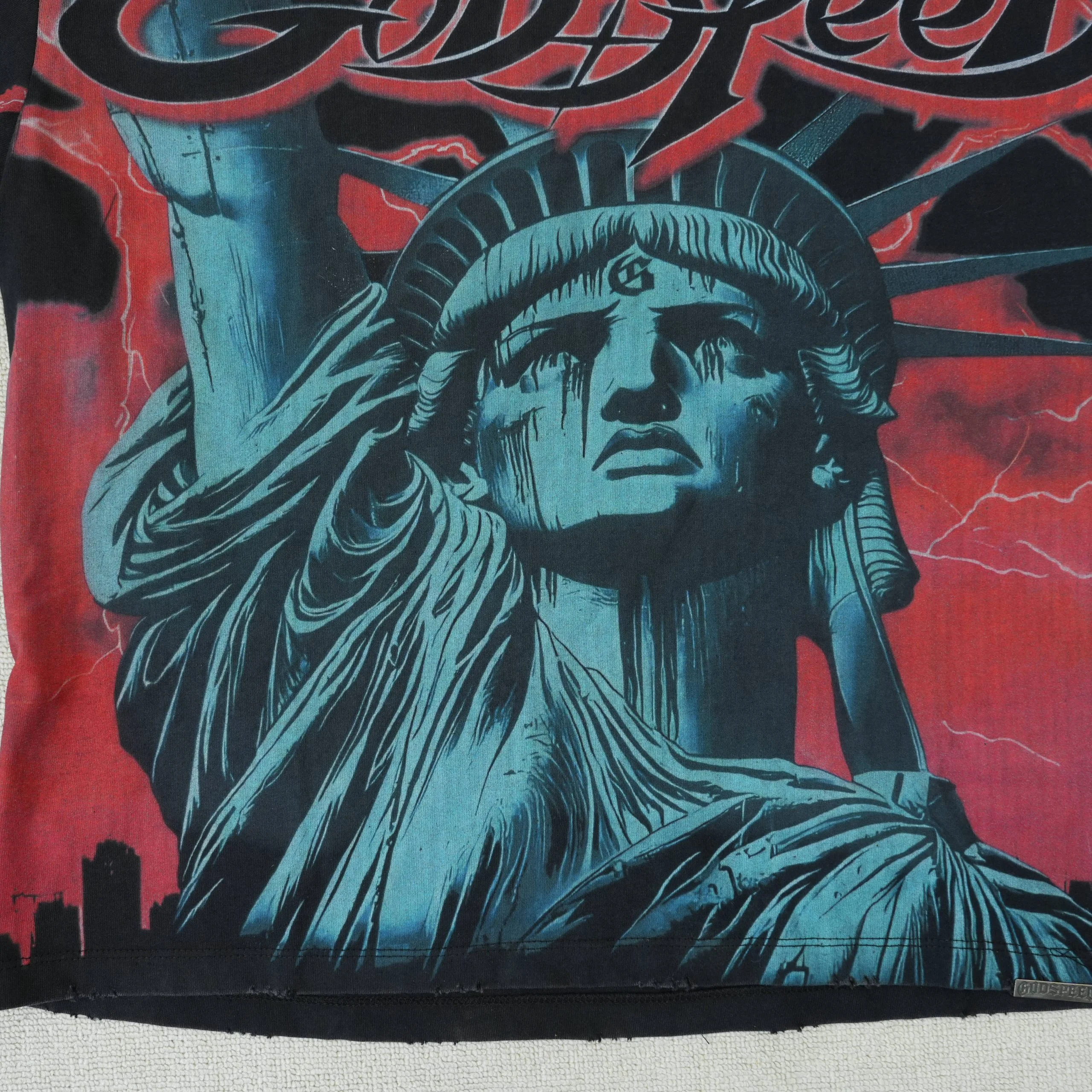
The True Origin of the Word Godspeed
The word’s roots reach back to Middle English, roughly the 14th century, when “God spede you” was a standard parting phrase wishing someone good fortune and a safe journey. This wasn’t throwaway slang; it was nearer to a blessing spoken ahead of a person’s leaving on a journey that was long or perilous — a trader bound for a far-off market, a soldier leaving for war, a wanderer beginning an uncertain path. Over centuries, the phrase collapsed into the single word we use today.
By the time modern English inherited it, godspeed had taken on a more ceremonial register. The word gets used at launches, departures, farewells, and moments of transition. This is exactly what godspeed means at its core: a word for the threshold moment, the instant right before something significant begins. Streetwear labels gravitate toward threshold language because their customers are often at their own thresholds — unfamiliar cities, fresh identities, new chapters of life.
This word history matters because it sets apart godspeed from generic streetwear naming conventions built on slang or shock value. It boasts 600+ years of documented use godspeed streetwear label in English literature, including appearances in Shakespeare’s plays, granting it a literary pedigree that few streetwear names can claim. This foundation helps explain its continued resonance in 2026, long after many of its contemporaries from its naming period have faded.
How Godspeed Found Its Way Into Streetwear Culture
Across the streetwear world, labels have consistently drawn on words evoking motion, rebellion, or reinvention—just consider how frequently brand names invoke speed, survival, or struggle. Godspeed as a brand falls into that tradition while introducing something few rivals offer: a built-in sense of blessing rather than aggression. It doesn’t posture. Nothing about it intimidates. It offers encouragement to the wearer while still driving them ahead.
The significance here is as much commercial as cultural. A godspeed shirt doesn’t need shock graphics to justify its name; the name itself performs that emotional labor. This is an unusual advantage in a market crowded with insignias jostling for eyeballs via noise rather than depth. When a name already carries centuries of resonance, the design team can focus on silhouette, fabric weight, and fit rather than on manufacturing artificial edge.
Godspeed clothing’s emergence as an identifiable category also reflects a broader 2020s shift toward streetwear rooted in introspection — labels shaped by mantras, affirmations, and personal stories instead of relying solely on hype cycles. Godspeed moved with that wave effortlessly because the term was never rooted in hype to start with. The word centered on leaving, hoping, and moving ahead, concepts that connect powerfully with a generation facing financial unpredictability and ceaseless reinvention.
Why the Name Resonates With Streetwear Buyers Today
Contemporary streetwear buyers, particularly those aged 18 to 34, gravitate toward brands that feel like they mean something beyond the fabric. Surveys on apparel purchasing behavior consistently show that a name or story with real substance raises how valuable something feels, even if the material specifications match a rival’s exactly. Godspeed benefits directly from this dynamic because the name enters the market already rich with narrative depth.
There’s also a practical layer. The godspeed hoodie serves as protection for everyday life — something to wear while commuting, training, traveling, or grinding through a long week — while still retaining that hint of being bound for something greater. Garments capable of serving both the everyday and the aspirational, typically stays in a customer’s rotation longer than pieces built around just one feeling.
The word carries effectively across linguistic and cultural lines, which carries weight for any line under the god speed name with goals that extend past one region. “Godspeed” doesn’t require translation to land emotionally; the concept of wishing someone well on a journey is close to universal. Such universal readability is part of why the name has endured as a solid brand identity instead of fading as a trend tied to a single scene or city.
How Godspeed’s Naming Themes Stack Up Against Other Streetwear Strategies
To understand why godspeed occupies a distinct lane, it’s useful to weigh it against the other leading naming approaches common in streetwear. The breakdown below breaks down four typical strategies by tone, durability over time, and usual customer perception.
| Naming Method | Central Mood | Staying-Power Risk | What Shoppers Tend to Associate It With |
|---|---|---|---|
| Godspeed-inspired (built from farewell-and-blessing expressions) | Uplifting, forward-looking | Slight — anchored by age-old wording | Voyage, drive, staying power |
| Names built on aggression | Combative, daring | Medium — can feel dated as the zeitgeist moves on | Dominance, nonconformity |
| Names built on current slang | On-trend, in-crowd | High — tied to a particular moment or channel | Freshness, in-group status |
| Using the designer’s surname or initials | Personal, creator-centered | Somewhere between low and moderate — hinges on the designer’s public presence | Craftsmanship, distinctiveness |
This contrast makes clear why a name rooted in long-established language holds up better over time than a name based on internet slang, a fleeting meme, or a reference tied to a particular era. Godspeed doesn’t need a cultural refresh every few seasons because its meaning was never tied to a moment — it was linked instead to a shared human experience built around departure, hope, and forward motion.
The Way “Godspeed” Speaks on a Item
Across a chest, sleeve, or back panel, the word reads more as a mantra when it appears. It’s a contrast made on purpose. Where a logo proclaims “buy this brand,” a mantra instead suggests “carry this idea with you.” Those who opt for a godspeed shirt rather than a basic graphic tee are, more often than not, expressing a quiet personal statement about momentum — the impression that they’re in the midst of moving toward something, even if it’s not yet clearly defined.
It’s also why the word pairs so naturally with minimalist design language. Relaxed cuts, understated tones, and pared-back type choices allow the word to hold the emotional payload instead of fighting for space with loud visuals. The word’s own restraint is reflected in the design’s restraint — godspeed doesn’t shout, it states.
There’s a reason countless godspeed shirts favor dense cotton fabric paired with tailored cuts rather than flimsy, disposable fabric. A term carrying so much historical weight deserves a garment made for longevity, not one destined for the donation bin after only one trip through the laundry. The physical durability of the piece acts as a quiet echo of the durability of the phrase itself.
How the Movement Still Manages to Hold On Heading Into 2026
Moving quickly as it does, street-fashion currents have already turned many name choices from the early 2020s into relics of the past. Since it never relied on a fashion cycle from the start, Godspeed avoided that same path. It borrows from something more enduring and settled than any single streetwear season — a tradition rooted in language that came long before the entire concept of streetwear by about 500 years.
As we move into 2026, the demand for purpose-driven apparel shows no sign of slowing and keeps building. Shoppers are turning skeptical toward brands built solely around a badge, while at the same time they rewarding brands and narratives that hold up under scrutiny. Far from being a fabricated brand tale, Godspeed’s narrative remains solid since it is grounded in documented linguistic history that anyone can verify.
Such a blend of realness and heartfelt impact is rare in fashion naming, and it’s precisely why the word remains the anchor for hoodies, shirts, and full collections without needing a refresh. Some names must be endlessly reworked to remain relevant; godspeed simply needs to go on meaning what it has meant all along.